Take Ownership: Your Self-care Resources
Welcome to your exclusive self-care vault! This resource page exists because your care shouldn't end when you leave the treatment room. As such, what you do with your body is on you, not me. So, here's a curated list of the stuff I actually trust: YouTube channels, podcasts, websites and research that's evidence-based, not just popular, no miracle cures, no "this one stretch fixes everything” and absolutely no influencer with a discount code. If it's on this page, it's because I'd genuinely recommend it.
That being said, a couple of ground rules before you dive in:
This page is for education and self-maintenance purpose. It is not for diagnosis. If something's acute, worsening or you're not sure what you're dealing with. Seek the advice of your GP, Physio or Osteo (I don’t treat anything acute).
Evidence-based doesn't mean boring or overly technical. Some of this is written for clinicians, some for the general public (I've noted which is which).
I'd rather give you sources I believe to be helpful over than a long wall of links you'll never actually use. Everything here has a purpose.
One important thing to note. I won’t always be right. I am will make mistakes, as I am human. Equally, I might not be the right fit for you, which is also okay. What does matter is I will keep learning from my mistakes, keep raising my own standard and continue balancing my person and practitioner life. You can honour such attempts or not, I dont mind eithway.
Local Recommendation:
Ash Pope, Massage Therapist: Body Restoration Room (@bodyrestorationroom)
Ben Robertson, Sport Massage Therapist: Muscle Concepts muscleconcepts.co.n
Kate Spurling: porthillsosteo.co.nz
Emily Hunt: inspiremotionphysio.co.nz
Eleanor Brown: Align Personal Training and Nutrition Coaching alignpersonaltraining.com
Janelle Woolride: Christchurch Personal Training Private Studio formfitness.co.nz
Sam Harvey: samharveyultra.com
Andy Good: Good Athletic goodathletic.co.nz
British Journal of Sports Medicine: One of the most respected sports medicine journals in the world.
BMJ Open Sport & Exercise Medicine: Genuinely free to read, peer-reviewed, published by the same team as BJSM (above). Good place to search a specific condition and actually read the study, not just a headline about it.
BMC Sports Science, Medicine and Rehabilitation: Covers rehab, exercise science, and athlete mental health. It’s free access and is peer-reviewed, making a great resource.
Research (Open Access & free to read)
Running Physio: Tom Goom's site, built specifically for runners. If you're dealing with Achilles pain, shin splints, ITB issues or anything running-related, this is written by someone who's clearly seen thousands of the same complaint.
ACC SportSmart: Our own government-backed injury prevention framework, ACC (Accident Compensation Corporation) was built by New Zealand academics and clinicians. This assessable, local and directly relevant to whatever you're playing or training for.
PEDro – Physiotherapy Evidence Database: Run by the University of Sydney. This is the actual research, not someone's summary of it. Dense, but if you want to go to the source, this is the source. Also, it is the premier database for randomised controlled trials and systematic reviews within physiotherapy.
Read: Websites & Databases
The E3 Rehab Podcast: Same crew as above, going deeper on specific conditions with actual researchers. Good for the drive to work.
Physio Edge: Long-running, well-respected in the profession itself. A solid way to hear how clinicians actually think through a problem.
Huberman Lab: Andrew Huberman is a Stanford neuroscientist, who provides excellent deep dives on sleep, circadian biology, stress, recovery, motivation. The stuff that affects your body just as much as any stretch does. One honest note, he occasionally gets ahead of the research on supplements and lifestyle claims, so treat it as a great starting point, not gospel.
The Run Down: This is Frontrunner Colomob’s podcast! It bridges the gap between a high-end, performance-focused running show and a "local radio" style chat show. It’s for the runner who wants to know exactly why a shoe’s foam density matters, but also wants to hear about the disastrous Airbnb stay or the funny encounter at the local park on the way to the start line.
Listen: Podcasts
Mental Health Foundation of New Zealand: If something's beyond what I can help with, this is where I'll point you and where you should go first. This is the primary non-profit resource within New Zealand for evidence-backed mental health guidance.
Huberman Lab: Here is some behaviour change and habit-building content that is also worth your time. Think motivation and consistency are half the battle with any rehab or training plan.
Mind: Mental Health & Behaviour
Physiotutors: Run by a team of physios and manual therapists who back everything with current research, on camera, not just in the video description. If you want to actually understand why your body's doing what it's doing, start here.
E3 Rehab: Doctors of Physical Therapy, no gatekeeping, no fluff. Strong on ACL rehab, tendon pain (Achilles, patellar, hip) and getting back to sport properly instead of rushing it.
The Prehab Guys: Prevention-first, which is exactly the mindset I want you in. If you're doing your homework between sessions, this is where to look for it.
Mike Reinold: Physical therapist and strength coach with a sports performance lean. Useful if you're an overhead athlete (throwing, swimming, racquet sports) or getting back into heavier training.
Watch: YouTube
Bottom Line
None of this will replaces a clinical assessment. Everything here is meant to help you understand your body and satisfy your curiosity. Taking ownership of your health shouldn't feel boring, unglamorous or confusing. You are the expert on your own body. Mobility work, strengthening and habit-building all take time and consistency. However, committing to them is what keeps you off my table and gives you far more long-term autonomy.
-
Common presentations include cervical stiffness, forward head strain and radiculopathy. Search these terms: cervical radiculopathy or levator scapulae myofascial pain. Resource: AAOS Neck Pain Guide
-
Common presentations include subacromial impingement, rotator cuff tendinopathy and frozen shoulder. You can use search terms like: rotator cuff tendinopathy or shoulder impingement syndrome. Resource: Mayo Clinic Rotator Cuff Overview
-
Common presentations include femoroacetabular impingement (FAI), gluteal tendinopathy, and hip osteoarthritis. Try looking up these search terms: gluteal tendinopathy, labral tear or hip OA. Resource: PubMed Gluteal Tendinopathy Review
-
Common presentations include lateral epicondylitis (tennis elbow) and medial epicondylitis (golfer's elbow). You can search terms like: lateral epicondylopathy or cubital tunnel syndrome. Resource: Orthobullets Tennis Elbow Guide
-
Common presentations include gastrocnemius strain, soleus tightness and Achilles tendinopathy. Try these search terms: gastrocnemius strain or Achilles tendinopathy. Resource: PubMed Achilles Tendinopathy Study
-
Common presentations include non-specific lumbar strain, disc herniation and facet joint arthropathy. Lookup terms such as: lumbar radiculopathy or mechanical low back pain. Resource: NICE Guidelines: Low Back Pain Overview
-
Common presentations include patellofemoral pain syndrome (runner's knee), meniscus tears and ACL sprains. Search terms like: patellofemoral pain syndrome or knee osteoarthritis. Resource: Mayo Clinic Knee Pain Overview
-
Common presentations include biceps femoris muscle strain and proximal hamstring tendinopathy. Use search terms like: proximal hamstring tendinopathy (PHT) or hamstring strain. Resource: PubMed Proximal Hamstring Tendinopathy
-
Common presentations include rectus femoris strain and quadriceps tendinitis. Try using terms like: quadriceps tendinopathy or rectus femoris strain. Resource: PubMed Quadriceps Strain Research
-
Common presentations include deep gluteal syndrome, piriformis syndrome and myofascial trigger points. Easy search terms might be: deep gluteal syndrome, piriformis syndrome or myofascial pain. Resource: PubMed Deep Gluteal Syndrome Research
-
Feet have a few things going but common presentations include plantar fasciitis, stress fractures and metatarsalgia. Common search terms are: plantar fasciitis or metatarsalgia. Resource: Mayo Clinic Plantar Fasciitis Guide
Big Toe: Common presentations include hallux valgus (bunions), hallux rigidus (big toe arthritis) and turf toe. You can search terms like: hallux rigidus, hallux valgus or turf toe. Resource: AAOS Stiff Big Toe (Hallux Rigidus) Guide
Arch: Common presentations include medial arch pain due to plantar fascia strain or posterior tibial tendon dysfunction. You can search terms such as: posterior tibial tendon dysfunction (PTTD) or flatfoot strain. Resource: AAOS Posterior Tibial Tendon Dysfunction Guide
-
Common presentations include carpal tunnel syndrome and De Quervain's tenosynovitis. Try using search terms like: carpal tunnel syndrome or De Quervain's tenosynovitis. Resource: Mayo Clinic Carpal Tunnel Syndrome Guide
-
Common presentations include cervicogenic headache and upper trapezius or suboccipital myofascial referral. You can search terms like: cervicogenic headache or tension-type headache (TTH). Resource: PubMed Cervicogenic Headache Study
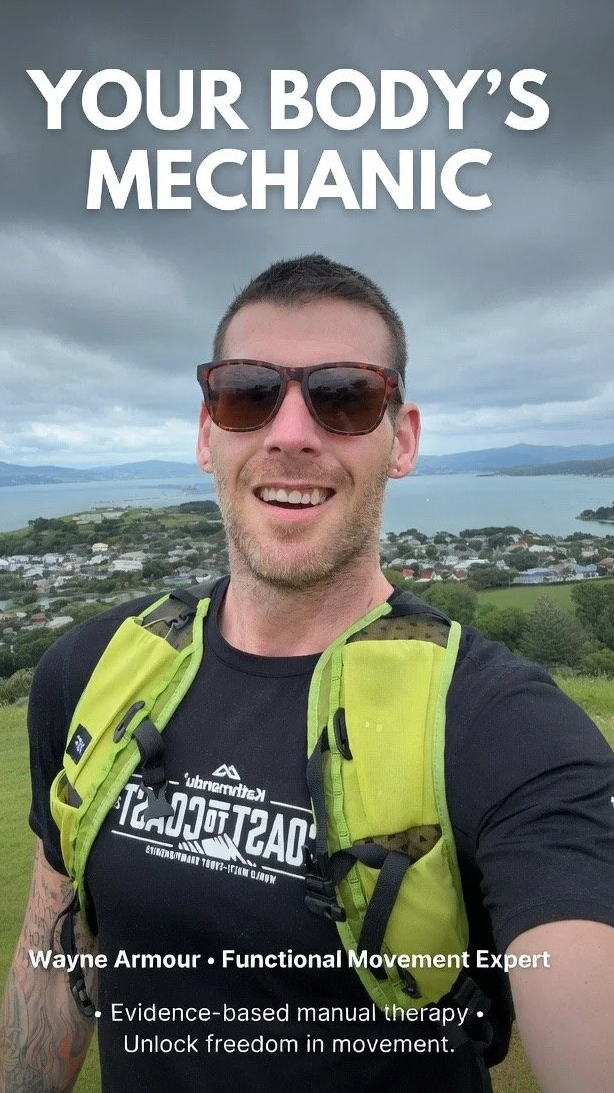
I used to think I had to separate who I was behind the clinic door from who I was everywhere else. Not anymore.
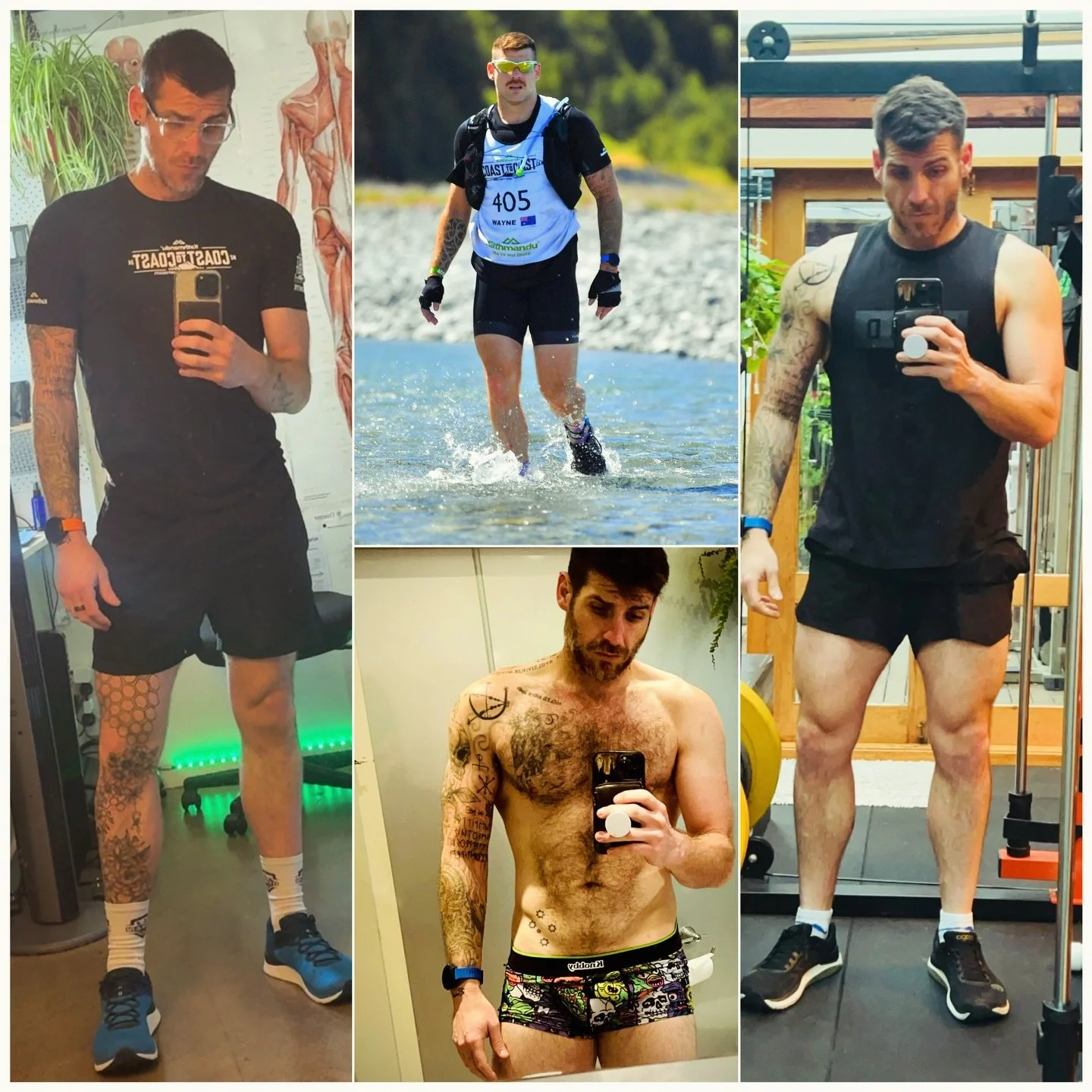
Professional and personal are no longer two different boxes I wish to separate any further. I’m a raging homosexual who’s incredibly neurodivergent and is unapologetically, unconventionally me. Yes, I understands human movement, injury recovery, human psychology, soft tissue techniques and how addictive sport can be. This isn't just my job at the end of the day, I live and breath this. If I'm going to help you take ownership of your health, then I need to take ownership of who I am.
Standing alone, as Your Body Mechanic, because this… this is me!
This might be cringe to some and I’m sure people will have plenty to say. But if you’re gonna judge me, make sure you’re out there doing better than me.
Also, while you’re at it, join the community: 40k+ on Instagram (@wayne_armour_) | 78k+ on TikTok (@wayne_armour)